
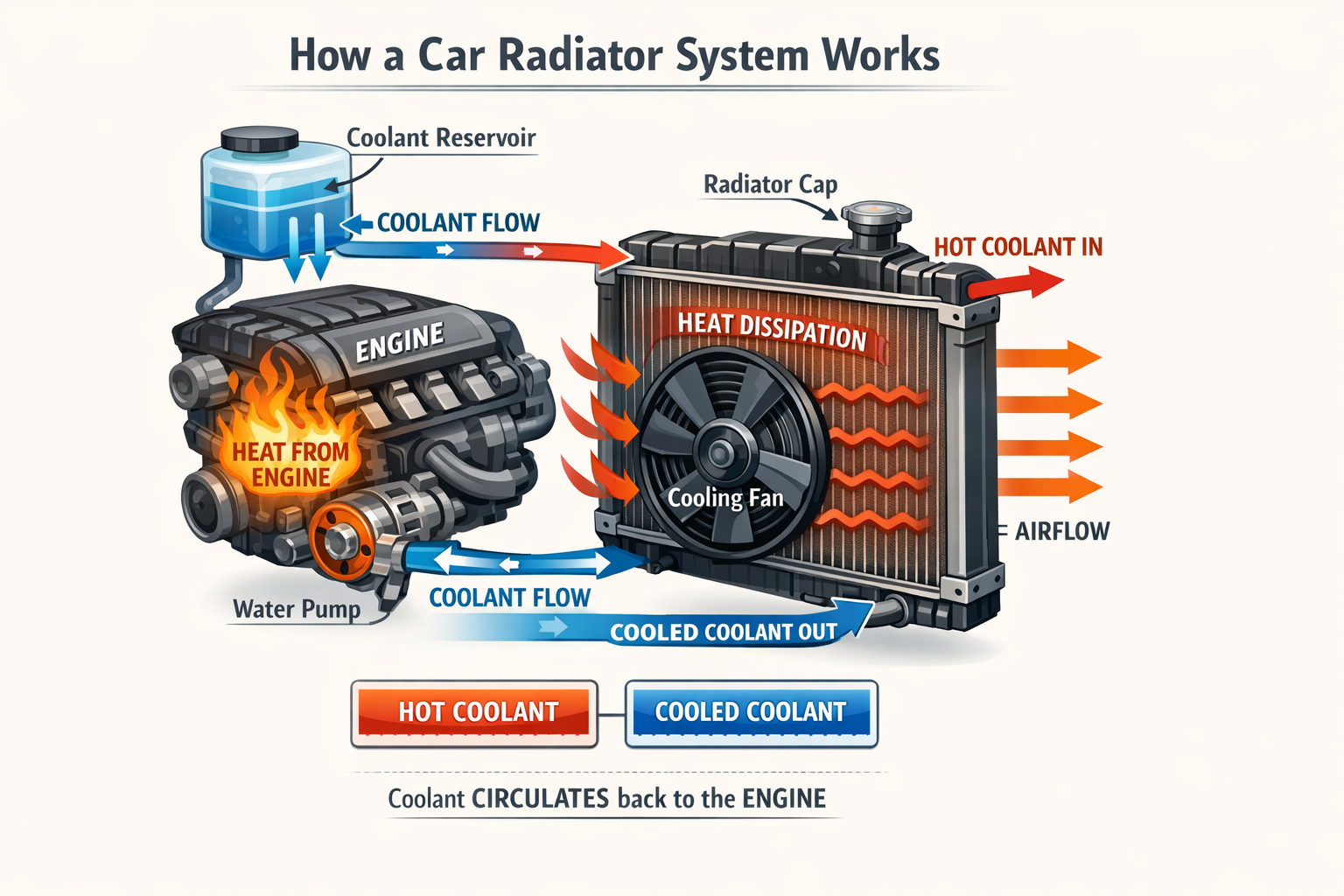
Car Radiator System Works
The radiator system is responsible for keeping the engine at the correct operating temperature. When the engine runs, it generates a large amount of heat. The radiator system removes this excess heat to prevent the engine from overheating. Coolant circulates through the engine, absorbs heat, and then flows to the radiator. Inside the radiator, the heat is released to the outside air. The cooled liquid then returns to the engine, and this cycle continues while the engine is running. A properly working radiator system prevents engine damage, improves performance, and increases engine life. Reg
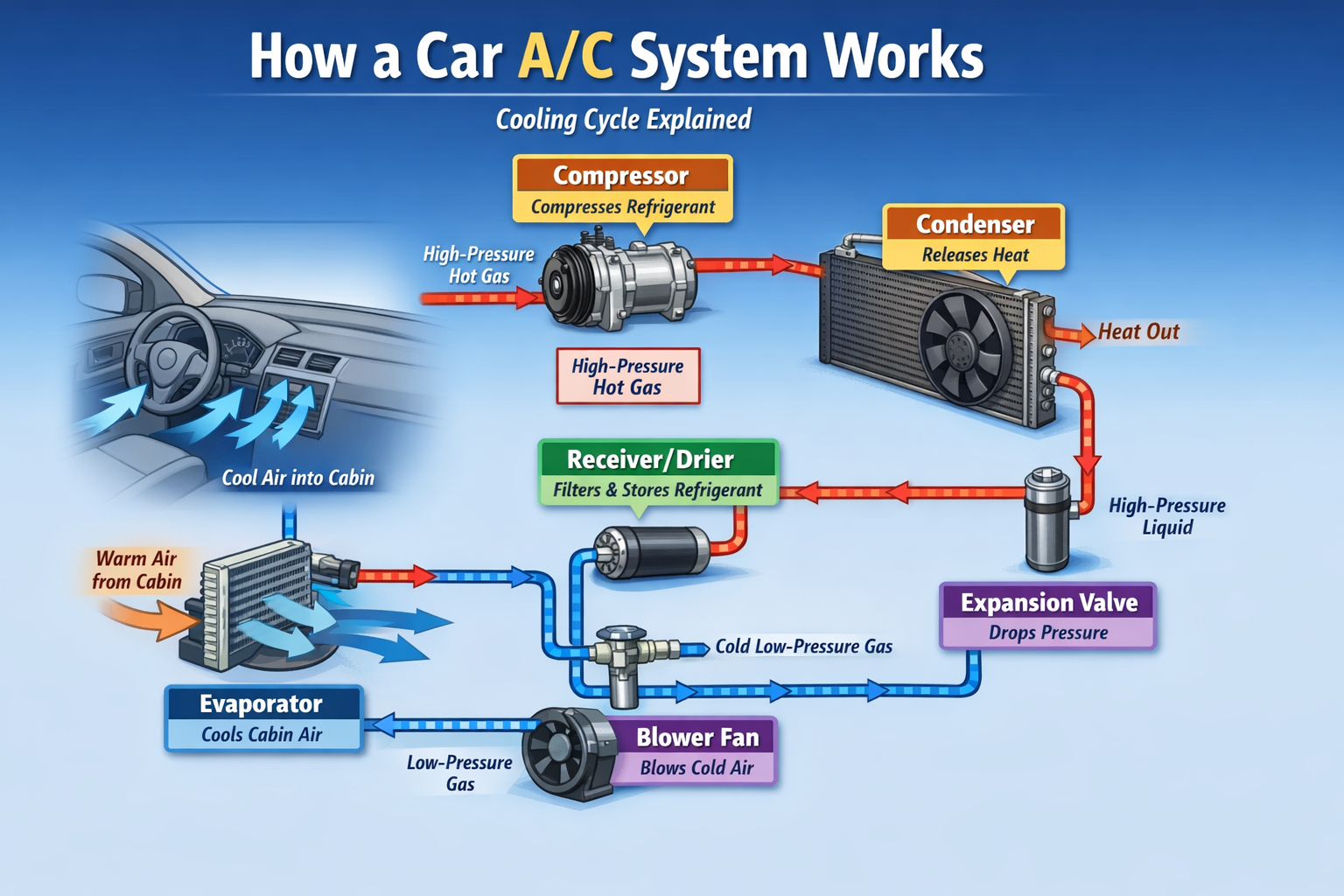
How a Car Air Conditioning (A/C) System Works
A car A/C system works by removing heat and moisture from the air inside the vehicle and releasing that heat outside. It operates using refrigerant gas, pressure changes, and a closed-loop system. Main Components & Their Functions 1. Compressor • The heart of the A/C system • Driven by the engine using a belt • Compresses low-pressure refrigerant gas into high-pressure, high-temperature gas • Sends refrigerant to the condenser ???? If the compressor fails, the A/C will not cool. 2. Condenser • Located in front of the radiator • Releases heat from the refrigerant to outside air • Co

Check Engine Lights.
The "check engine light" (also called the Malfunction Indicator Lamp or MIL) is a warning light on your car's dashboard that indicates a problem with the engine or emissions system.
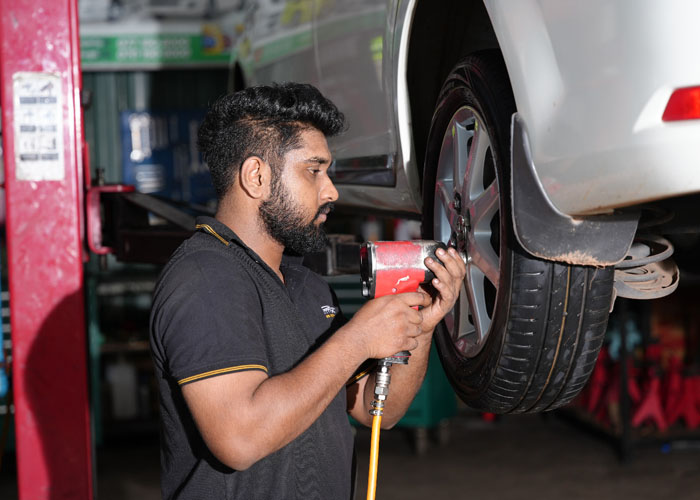
Maintain pressure in your tires.
Maintaining proper tire inflation pressure is crucial for vehicle safety, fuel efficiency, and tire lifespan. The recommended pressure for your vehicle is typically found in the owner's manual or on a sticker inside the driver's door.

Don't spin your tires excessively.
Excessively spinning your tires can lead to several problems, including rapid tire wear, increased heat buildup, and reduced traction. It's important to avoid excessive spinning, especially in situations like being stuck in snow, mud, or sand.
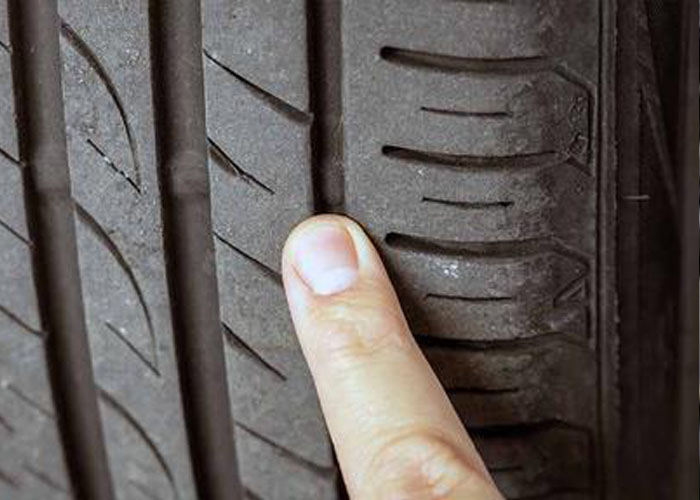
Check your tires for damage.
check your tires for damage, inspect them for cuts, cracks, bulges, or any other visible damage, and check for uneven wear patterns
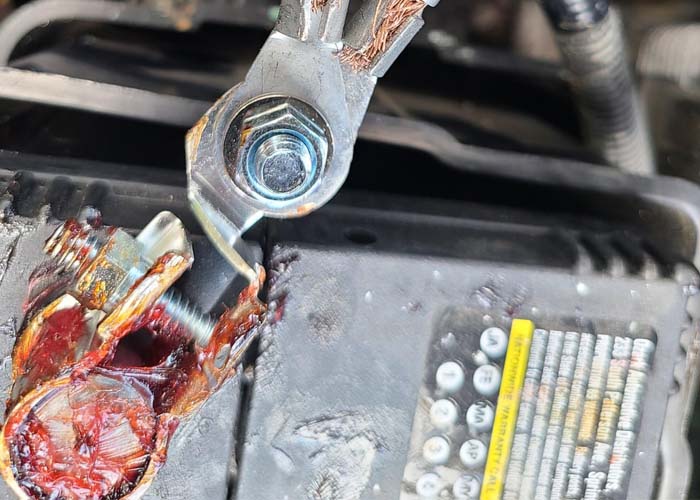
Check the Battery Terminals
To ensure proper battery performance, it's crucial to check the cleanliness and tightness of battery terminals. Visually inspect for corrosion or dirt, and gently wiggle the cables to check for looseness.

Adjust rearview mirror and side mirrors
Car mirrors are crucial for safe and efficient driving, acting as an extended view of your surroundings. They help you see what's happening behind and to the sides of your vehicle, particularly in blind spots, which are areas you can't see with your peripheral vision.

Adjust your seat.
Adjusting your car seat properly is crucial for a comfortable, safe, and efficient driving experience. It impacts fatigue, control, and overall safety by allowing you to maintain good posture, reduce strain, and respond quickly to the road.
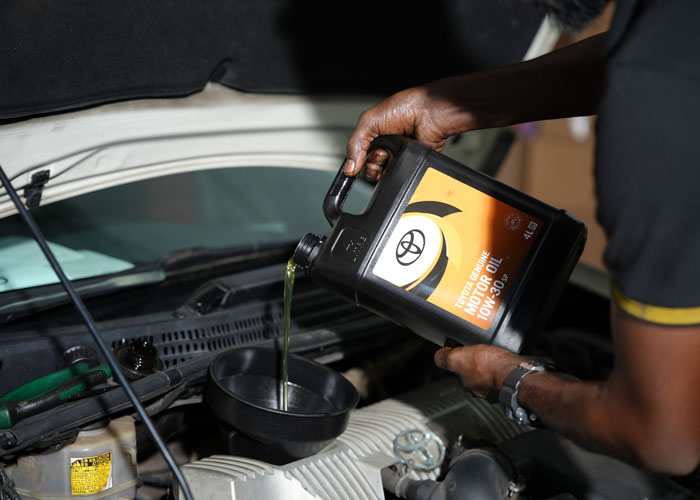
Regular Oil Changes
Change your oil regularly, as recommended by your manufacturer, to keep your engine lubricated and protected. Consider changing the oil filter at the same time is most importance Change your oil regularly, as recommended by your manufacturer, to keep your engine lubricated and protected. Consider changing the oil filter at the same time is most importance Change your oil regularly, as recommended by your manufacturer, to keep your engine lubricated and protected. Consider changing the oil filter at the same time is most importance.
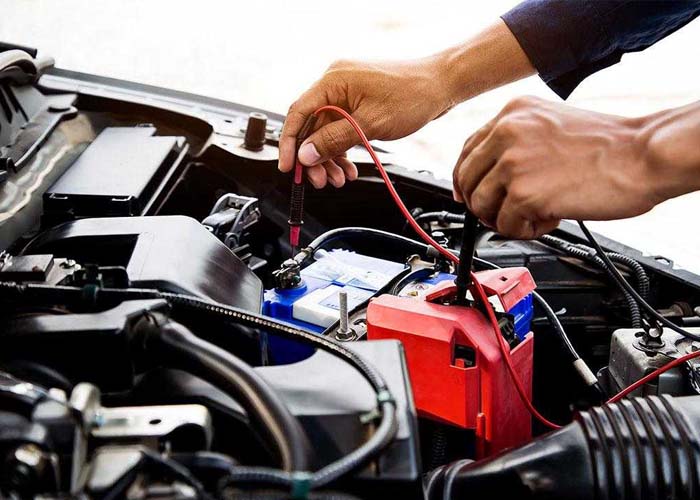
Test your battery is important.
Battery tests are crucial for ensuring reliability, safety, and performance of battery-powered devices. They help identify potential issues like reduced capacity, voltage drop, and internal resistance, allowing for timely maintenance or replacement.